Corpo Pagina
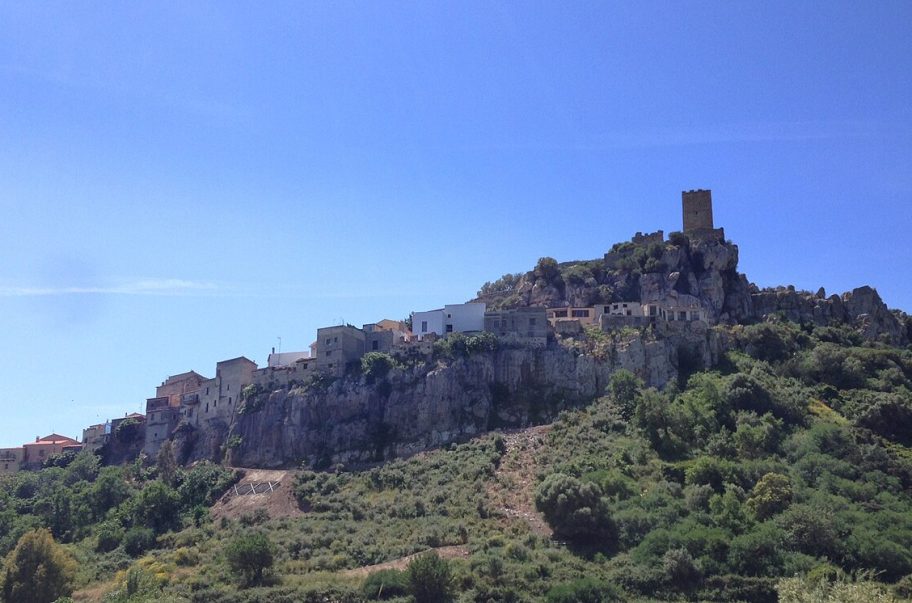
Posada, a village of 3,000 inhabitants in the Baronia region along the north-eastern coast of Sardinia, stands where Pheronia Polis—mentioned by Ptolemy in his 2nd-century AD work Geographia—is presumed to have been located. The settlement, founded at the beginning of the 4th century BC, was likely situated at the mouth of Posada River, on the hill where the current town stands.
The earliest traces of human activity in the area date back to the Bronze Age.
Notable among the Nuragic settlements are the Monte Idda nuraghe and the Paule ’e Pedru tomb of the giants.
Large quantities of Eastern, Phoenician, Greek, and Etruscan ceramics testify to the vitality of the area between the 9th and 6th centuries BC. The river port of Pheronia is believed to have remained active during the 4th and 3rd centuries BC as well.
In the 1st century BC, the Greek historian Diodorus Siculus recounted a Roman attempt to establish a colony on the island by sending five hundred settlers. Taking advantage of a plague epidemic that had broken out in Carthage, this move was made despite Sardinia being firmly under Punic control. This new settlement, hypothesized to date back to 378–377 BC or 386 BC, has been identified by scholars as Ptolemy’s Pheronia. It was placed under the protection of the Italic goddess Feronia, who was associated with the plebeian world and the slaves’ right of asylum at sanctuaries. The bronze statuette of Hercules wearing the Nemean lion skin, currently on display at our Archaeological Museum, appears to be linked to this attempted settlement.
Some scholars have also identified Posada as Portus Liguidonis, an important port of call mentioned in both the Antonine Itinerary and Ptolemy’s Geographia; however, other authors place this port in the locality of Santa Lucia di Siniscola instead.
Featured picture: Posada
ph. Andrea Albini, CC BY-SA 3.0 <https://creativecommons.org/licenses/by-sa/3.0>, via Wikimedia Commons
