Corpo Pagina
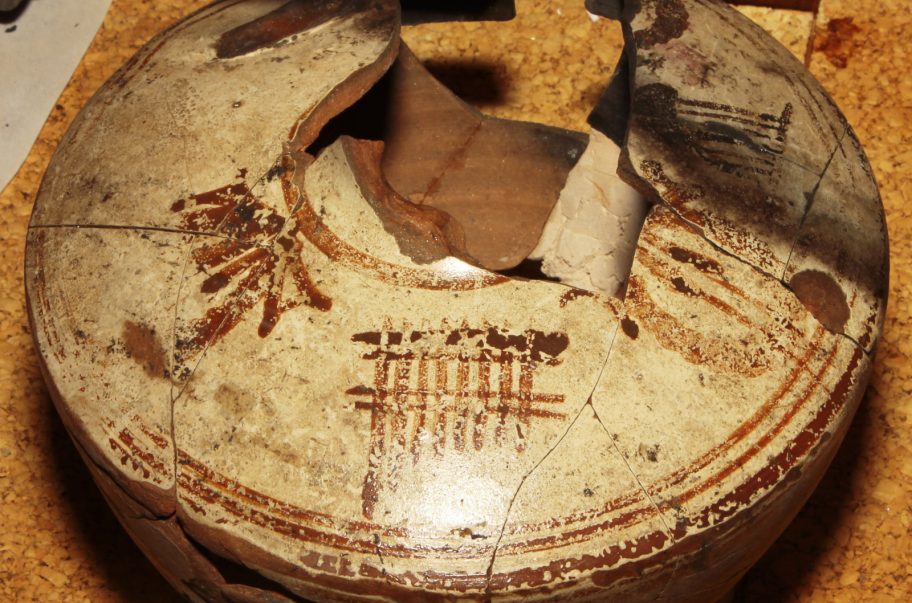
During the excavations carried out between 1999 and 2007 in the necropolis of Tuvixeddu, among the many burial artifacts, were found several objects related to the world of music. These include a jug depicting some musical instruments, discovered in tomb 110, and a pair of cymbals from tomb 621. The grave goods from both burials are displayed on the first floor of the Museum, in the showcases dedicated to Tuvixeddu.
The Necropolis of Tuvixeddu is the largest surviving Punic necropolis in Sardinia. People began to use this funeral area in the late 6th century BC and they continued to use it until the Roman period. Originally it covered about 80 hectares, from Santa Gilla to Via Is Maglias and from Viale Sant’Avendrace to Viale Merello.
There are mainly Punic chamber rock-cut tombs, with well access. Through a deep vertical corridor, one could get into a chamber, sometimes with painted walls, where the deceased would be placed along with precious burial objects such as jewelry, coins, ceramic vases, and figurines.
The jug, known as lagynos, comes from the region of Asia Minor. What remains today is part of the body, including the handle attachment and the base. Its surface is coated with a cream-colored slip and decorated with reddish paint showing garlands, festoons, and musical instruments. Among these, we can clearly see a syrinx (or Pan flute), a wind instrument made of several pipes tied together. This type of vessel is commonly associated with wine consumption and may have been used during banquets or offered in sacred or funerary contexts.
The two bronze cymbals consist of a disk with a central boss, where a ring is attached to serve as a handle. Cymbals are direct percussion instruments and, in the Punic world, are often associated with the worship of the goddess Astarte. It is believed that these instruments may have belonged to an elderly woman buried in the tomb, and were likely used during religious ceremonies dedicated to Astarte.
