Corpo Pagina

The village of Senorbì is located in Trexenta region, an area that has yielded evidence dating back to the most remote eras, demonstrating its importance over time.
Dates back to the Late Neolithic (4th-3rd millennium BC) the Mother Goddess of Turriga, a geometric cruciform idol found in the area bearing the same name on the border between the municipalities of Senorbì, Selegas and Ortacesus.
During the Nuragic period, continuous human presence is evidenced by the numerous nuraghes scattered throughout the area. The bronze statuette discovered in 1841 in Santu Teru dates back to the 8th-7th centuries BC. It depicts a warrior with a horned helmet, breastplate and greaves.
The most significant finds date back to the Punic period, when, at the end of the 6th century BC, the first nuraghes were built. A settlement was founded on the hill of Santu Teru in the 5th century BC, consistent with the Carthaginian policy of expansion and territorial control of the hinterland after the conquest of Sardinia.
The settlement, with a wall protecting the acropolis and likely foundries, developed in the following decades, thanks primarily to intense agricultural activity in the fertile Trexenta region.
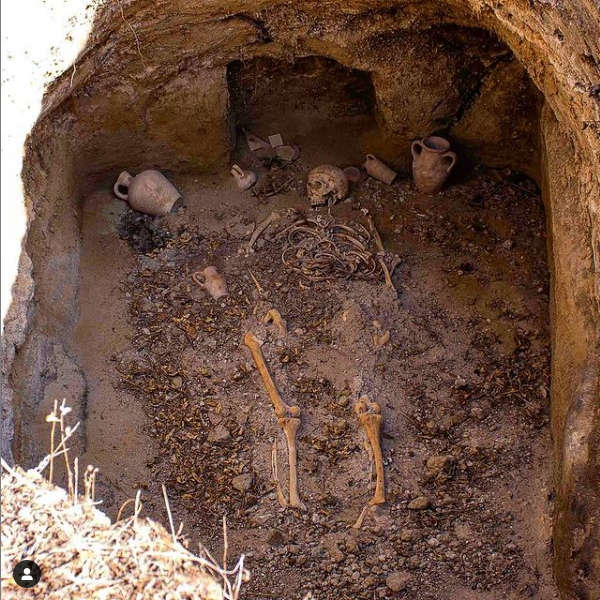
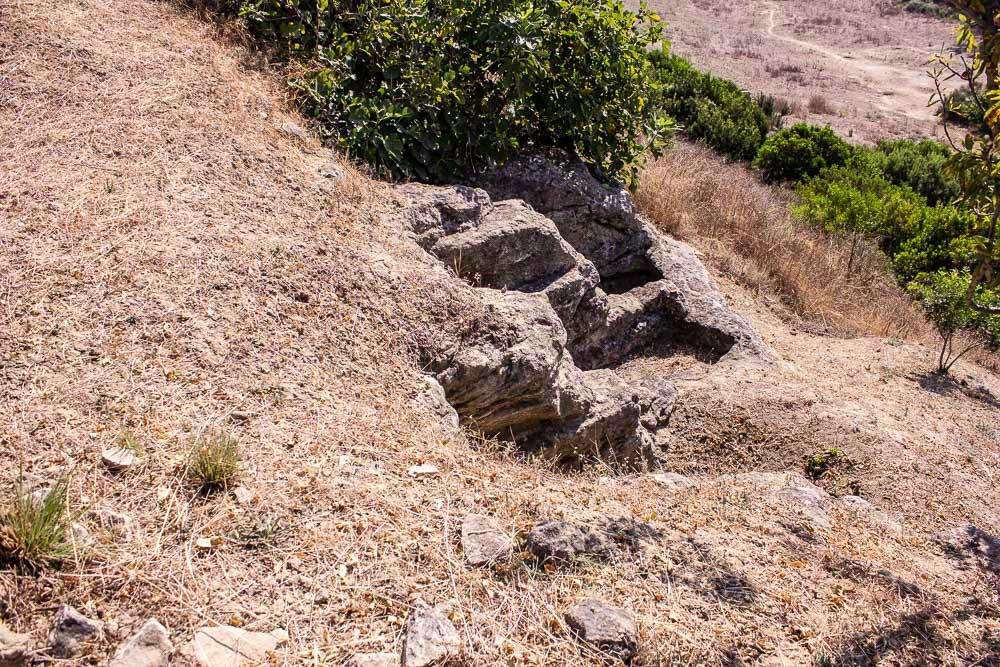
The rich grave goods from the necropolis on the opposite hill of Monte Luna testify the prosperity achieved by its inhabitants.
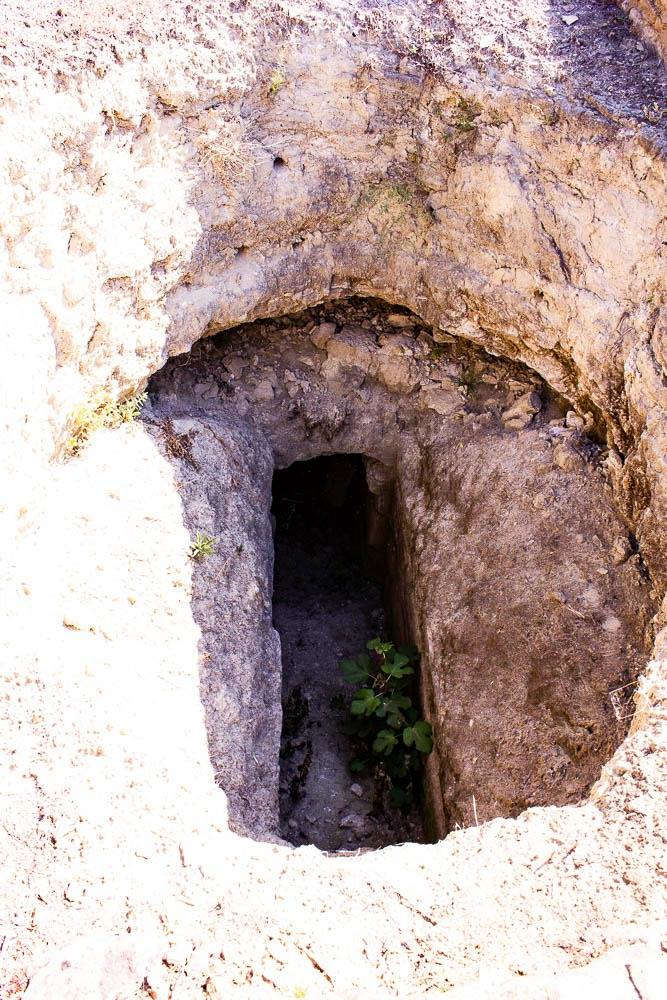
The necropolis, in use from the 5th to the 3rd century BC, included various types of burials: pits, shafts, caissons with a covering slab, burial niches, and enchytrismos, but the most commonly attested type is the underground chamber with a shaft entrance.
Of exceptional importance are the gold, bronze, and silver jewelry of Punic manufacture or imported from the cities of Magna Graecia. Particularly noteworthy are the gold plates with the Gorgon’s face and the extraordinary necklace with an acorn pendant.