Corpo Pagina
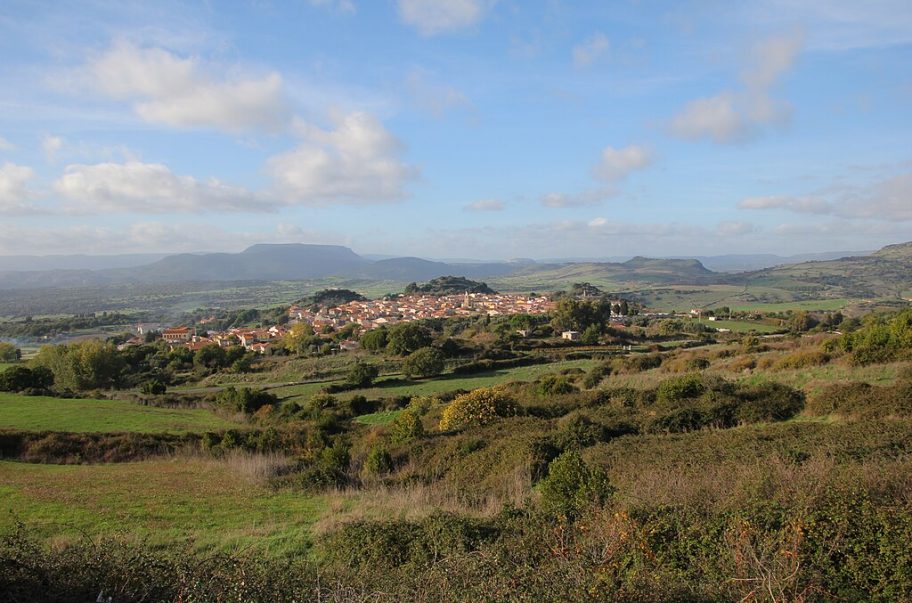
The area of Padria, a town in the province of Sassari in the center of Logudoro-Meilogu region, shows evidence of continuous human habitation dating back to the Neolithic.
Among the prehistoric sites are several domus de janas. Some have a single-chambered or double-chambered layout, while the complexes of Sa Punta Ruggia, Nenaldu Multinu and Baddenare are multi-chambered. The latter are of particular artistic value, with architectural elements carved into the rock, such as columns, pillars, bull protomes, and horn-shaped motifs. Most of them, carved into the rocky ridges, are grouped together in large necropolises.
The Nuragic era is represented by approximately forty nuraghes located in strategic positions, controlling waterways or at the edge of plateaus. Single-tower buildings predominate, such as Binzas nuraghe, constructed of regular basalt blocks and studied by Antonio Taramelli in 1940, and Comida ‘e Muru nuraghe, characterized by a distinctive elliptical plan. However, there are also examples of complex nuraghes, such as Longu and Santu Sadurinu.
The area has yielded exceptionally valuable finds, such as a small Nuragic bronze statue of a praying soldier with a rapier, shield, and helmet with long, pointed horns, or the bull-protome-shaped prow of a Nuragic bronze vessel.
The continuous habitation of San Giuseppe hill is confirmed by the traces of a fortified settlement from the Phoenician-Punic period, discovered in the very area where, in the 16th century, the baronial palace of De Ferrera family (now known as Palattu) was built.
Of particular interest is a terracotta slab from the Church of Santa Croce, depicting a winged Victory on a racing chariot. Found in fragments, it was donated by Canon Giovanni Spano to the Royal Museum of Cagliari. Spano reports that the slab was found in Gurulis Vetus, the city mentioned by the geographer Ptolemy in the 2nd century AD. According to scholarly tradition, supported by Spano’s studies and archaeological evidence, modern-day Padria stands directly over the remains of this ancient urban center.
The name Gurulis Vetus likely served to distinguish it from the nearby Gurulis Nova (identified with modern-day Cuglieri). It was not a simple rural settlement, but a structured and vibrant center, as evidenced by the presence of three bridges over Temo River and its tributaries (Ponte Alto, Ponte Ettore, and Ponte Ulumu).
These infrastructures confirm that the city was a key hub along the road connecting Carales (Cagliari) with Turris Libisonis (Porto Torres).
Remains of thermal baths, mosaic floors, and water cisterns were also discovered, as well as several votive altars and inscriptions suggesting the presence of places of worship. Furthermore, the surrounding funerary areas yielded grave goods consisting of fine glass, sealed ceramics, and coins.
Featured picture: Padria
ph. Gianni Careddu, CC BY-SA 4.0 httpscreativecommons.orglicensesby-sa4.0, via Wikimedia Commons
